← Story Library
Kinder Yarns

One Last Light

One Last Light

Luma was the last one.

All summer, the garden had been alive with fireflies. Hundreds of them, maybe thousands, rising from the grass at dusk and filling the air with their gentle blinking. The children who lived in the house would run through the garden with nets, laughing and chasing, and the fireflies would scatter like sparks from a campfire.

But autumn came. The nights grew cold. One by one, the fireflies blinked out. They found their places beneath the roots of the old oak, or in the hollow of the stone wall, or deep in the piles of fallen leaves. They curled their wings and closed their eyes and waited for the warmth to return.

Now Luma was the only one left.

She drifted above the garden in the blue twilight, her light pulsing softly. The garden was quiet. The summer birds had gone south. The frogs had stopped singing. The only sound was the wind moving through the bare branches of the cherry tree, making a sound like a whisper.

Luma looked down at the garden she had known all summer. It was different now. The grass was brown and soft with frost. The flowerbeds were thin and tired. The world smelled of earth and cold and the last of the fallen leaves.

But it was still beautiful. In its own quiet way, it was more beautiful than before. You could see the shape of things now — the bones of the garden, the stone wall and the old oak and the little pond that held the sky like a mirror. In summer, everything had been so full and green that the bones were hidden. Now the garden wore its skeleton proudly, and there was a kind of honesty in it that Luma liked.

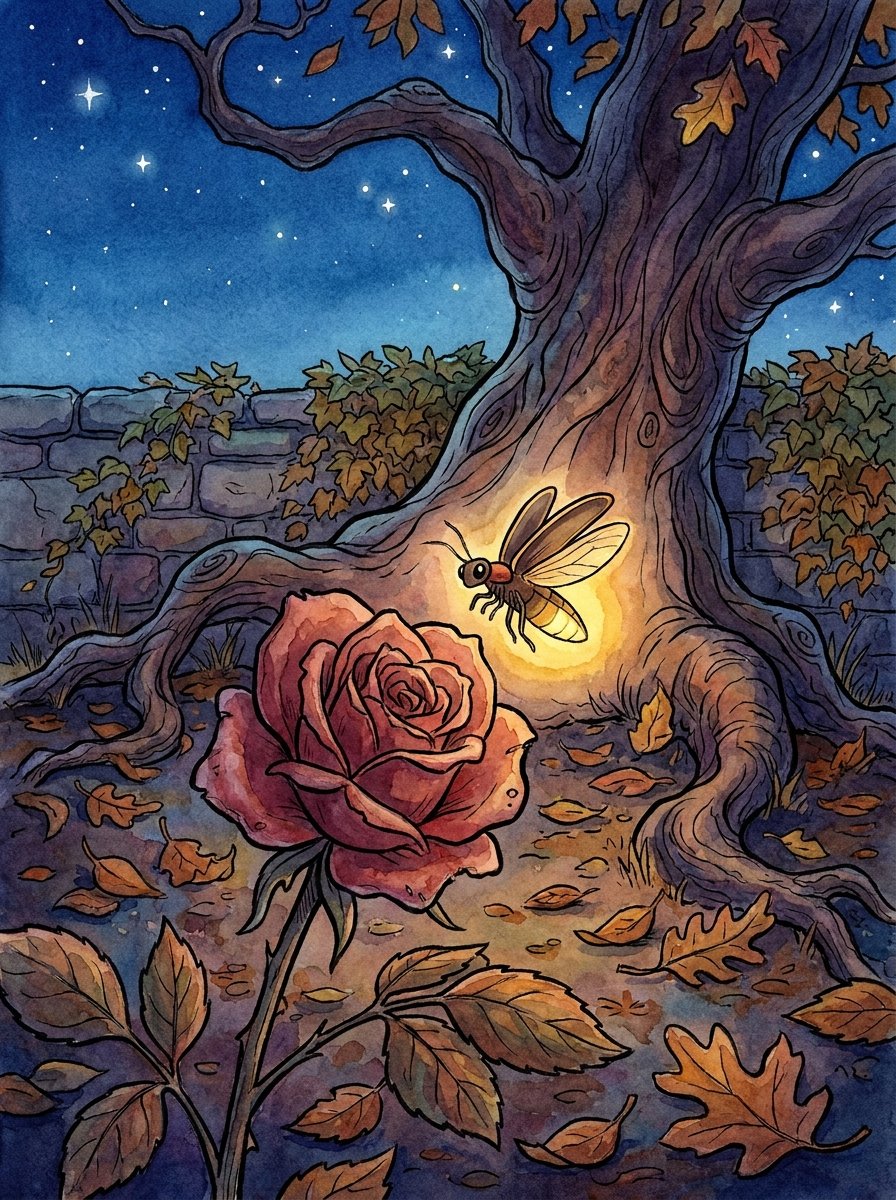
She flew down to the first flower she came to. It was a rose, still clinging to a few red petals. Most of them had fallen. The ones that remained were curled at the edges, like paper that had been held too long. But the colour was still deep and rich, almost glowing in the fading light.

"Hello," said Luma.

The rose did not move. But Luma could feel it there, alive in its own slow way, sleeping and waking and sleeping again.

"I came to say goodbye," said Luma. "Summer is over. I wanted you to know that I remembered you. You were the first flower I visited when I woke up in spring. You were so small then. Your petals were tight and green and you smelled like something wonderful was about to happen."

A breeze moved through the garden. The rose trembled, and one more petal drifted down.

"Thank you," said Luma. "For being beautiful."

She flew on.

Near the stone wall, she found the forget-me-nots. They were tiny and blue, clustered together like a small crowd of friends. Most had gone to seed, but a few still held their colour, faint as sky reflected in a puddle.

"Hello," said Luma.

The forget-me-nots were always quiet. Even in summer, when the bees buzzed around them and the butterflies landed on their petals, they said nothing. They just grew, small and patient and blue.

"You were the bravest flowers in the garden," said Luma. "You were so small, but you never stopped blooming. You filled the spaces between the big flowers with colour. You made the garden feel whole."

She hovered above them. "Do not forget me," she whispered. "And I will not forget you."

The forget-me-nots nodded in the wind.

She flew on.

The next flower was a sunflower. It stood at the back of the garden, tall and broad, its great golden head bowed low now, heavy with seeds. In summer it had been the tallest thing in the garden, a bright yellow beacon that the bees loved. Now it was brown and dry, and its seeds hung in neat rows like tiny black stars.

"Hello," said Luma.

The sunflower said nothing. But its seeds rattled softly in the wind, and Luma thought it sounded like a greeting.

"You were the bravest flower I knew," she said. "You stood so tall. You looked at the sun all day and never looked away. I used to rest on your petals in the evening and watch the sky turn pink."

She hovered close to the seed head. "I hope some of your seeds grow next year," she said. "I hope there are baby sunflowers in this garden again, standing tall in the summer sun, just like you."

The wind blew. The seeds rattled their agreement.

Luma flew on.

She visited the lavender, which was thin and grey now but still smelled like summer when the wind touched it. She visited the daisies, most of them gone, just a few white faces still turned toward the sky. She visited the chrysanthemums, the last flowers of autumn, still bright in yellows and purples, standing brave against the cold. They were the ones who held on longest. Every year, when everything else had faded, the chrysanthemums were still there, burning their quiet colours into the grey days of November. Luma admired them for it. They did not give up easily.

At each one, she said the same thing. I remembered you. Thank you for being beautiful. Goodbye.

Near the hawthorn, she found a bird's nest in the branches. It was empty now. The birds had left in September, and the nest had been still for weeks. But Luma remembered the spring, when the mother bird had sat on the eggs and the father bird had sung from the fence post every morning. She remembered the day the eggs hatched and the nest was full of open mouths and tiny, desperate chirping.

"Thank you for the songs," Luma whispered. "I used to listen from the grass below. Your father sang every morning before the sun was up. Your mother sang back. And when the eggs hatched, the whole garden was full of music."

The wind moved through the hawthorn, and the empty nest swayed.

She flew over the pond. The water was dark and still, reflecting the first stars. In summer, it had been alive with dragonflies and water striders and the occasional frog. Now it was quiet. The lilies had closed. The reeds were brown. But the water was still there, patient and deep, holding the sky the way it always had.

"Goodnight," said Luma to the pond.

The pond said nothing. But the moonlight trembled on its surface, and Luma thought it looked like a smile. A frog, the last one, sat on a lily pad and blinked at her once, slowly, before sinking back into the water. Even the pond was getting ready to sleep.

She looked toward the house. The yellow windows glowed. She could see the children through the glass, sitting at the table, doing homework or drawing or whatever children did on cold autumn evenings. They did not know she was here. They did not know she was the last one. In summer, they had chased her with nets and laughed when she blinked. One night, the smaller child had caught her in cupped hands and held her gently, just for a moment, before letting her go. Luma remembered the warmth of those hands. She remembered the child's face, close up, eyes wide with wonder. Now she was just a small light in a dark garden, invisible and alone.

But not really alone. The garden was here. The flowers were here. The old oak was here. And beneath its roots, the other fireflies were sleeping, waiting for her.

The garden grew darker. The stars came out, one by one, like fireflies in the sky. Luma flew higher to see them better. She could see the whole garden from up here — the stone wall, the old oak, the little pond, the house with its yellow windows and the chimney trailing smoke.

She thought about the summer. She thought about the nights when the garden was full of light, when every blade of grass had a firefly above it, when the air hummed with wings and warmth. She thought about the children running and laughing, their hands cupped around the lights they caught. She thought about the way the world had felt, alive and bright and endless.

It was not endless. Nothing was endless. But that was all right. The garden had taught her that. Everything had its season. The flowers bloomed and faded. The fireflies blinked and slept. The days grew long and then grew short. And then they grew long again. It was the way of things, and there was a beauty in it, the same way there was a beauty in the last petal falling from a rose.

She thought about the other fireflies, sleeping beneath the roots of the old oak. They were waiting for her. She could feel them there, a faint hum beneath the soil, like a heartbeat. She was not really alone. She had never been alone. She was just the last one to close her eyes.

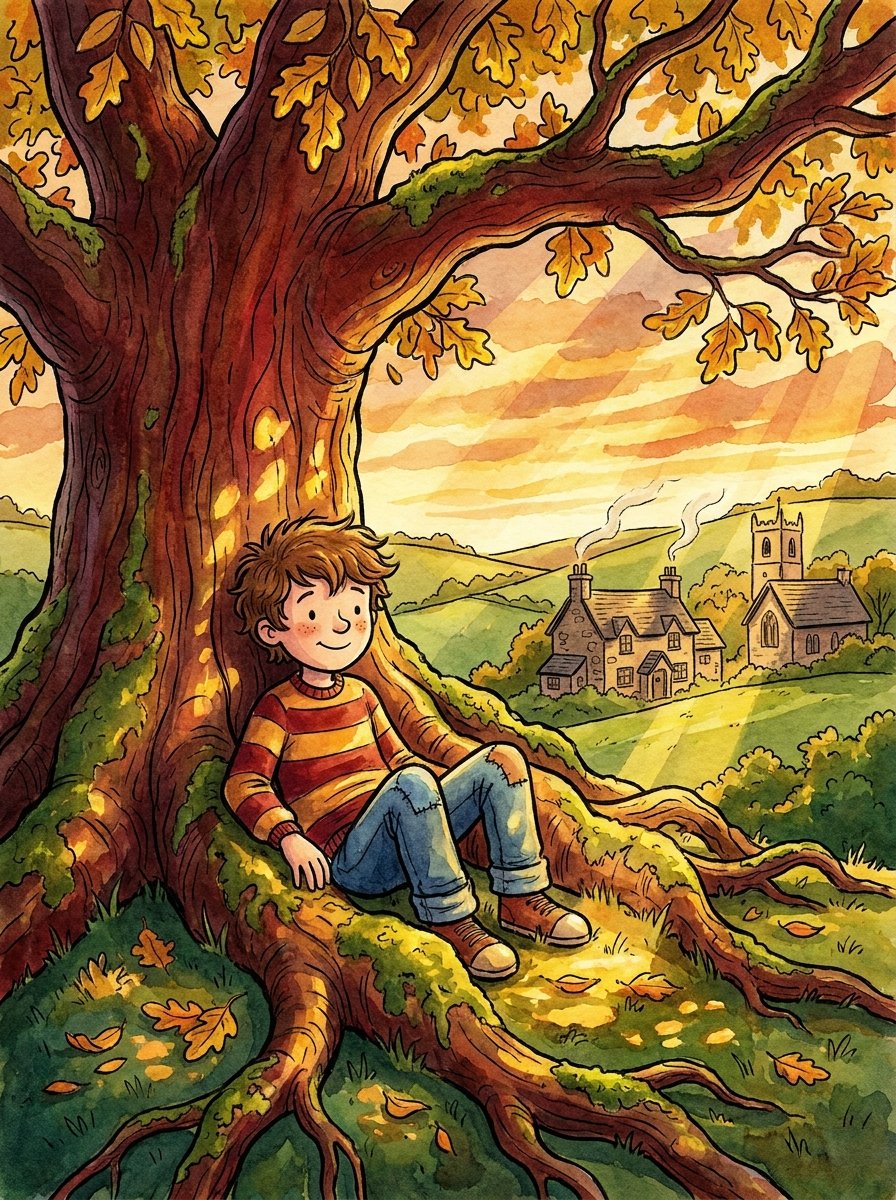
Luma flew down to the old oak. She knew its roots well. They spread across the garden like great wooden arms, holding the earth together. Beneath the great twisting roots, there was a hollow — a small, dark, perfect place. She had spent the summer flying past it a hundred times, but she had never needed it. Now she did.

She settled into the hollow. The earth was soft and cool and smelled like rain and the deep, old smell of roots that had been growing for a hundred years. She could feel the other fireflies nearby, sleeping in their own small spaces beneath the roots. A faint warmth touched her wings — not heat, exactly, but the memory of heat, held in the bodies of all the fireflies sleeping side by side. She was close to them now. She was part of them again.

She folded her wings carefully. Her light pulsed once, twice, three times — a final greeting to the garden.

"Goodnight," she whispered.

The garden whispered back. It was not a word. It was the sound of wind in branches and water in the pond and the distant hoot of an owl. It was the sound of crickets in the grass, the last ones of the year, singing their thin, brave songs into the cold. It was the sound of the world saying: I am here. I will be here when you wake up.

Luma closed her eyes.

She did not know how long she would sleep. Weeks, maybe. Months. The earth would freeze and thaw and freeze again. Snow would come. The garden would be buried in white, and the world above would be silent and still. But beneath the snow, beneath the frost, the roots would hold. The seeds would wait. The earth would remember everything — every petal that fell, every song the birds sang, every blink of every firefly that ever rose above the grass. The garden kept these things the way a book keeps its stories, safe and patient, ready to be opened again.

And when the warmth returned — when the days grew long and the nights grew soft — Luma would wake up. She would stretch her wings and rise from the hollow and blink her light into the new air. And the garden would be there, green and bright and full of flowers that had been sleeping all winter, ready to bloom again.

She knew this the way she knew how to fly. It was not a thought. It was a feeling. A quiet, certain feeling, like the pull of the moon on the tide.

The garden would come back.

And so would she.

Her light dimmed to a faint glow. Then to a whisper. Then to nothing.

The garden was dark.

But in the old oak's roots, a firefly slept, and dreamed of spring, and waited.

Preview
Share this story
Kinder Yarns

Listen in the app

Engaging, narrated stories for kids aged 4-10.
↓  App Store ↓  Google Play